IN THIS CHAPTER
Read at your own pace. Take the ideas that fit your trip, and leave room for your own route.
Baščaršija: follow the working streets
Sarajevo’s historic bazaar grew in the Ottoman period. Its craft streets, places of worship and trading spaces give you more to notice than a single landmark. Begin around Sebilj, then choose a route that leaves time for the smaller streets and the buildings you want to understand.
Two bridges, two settings
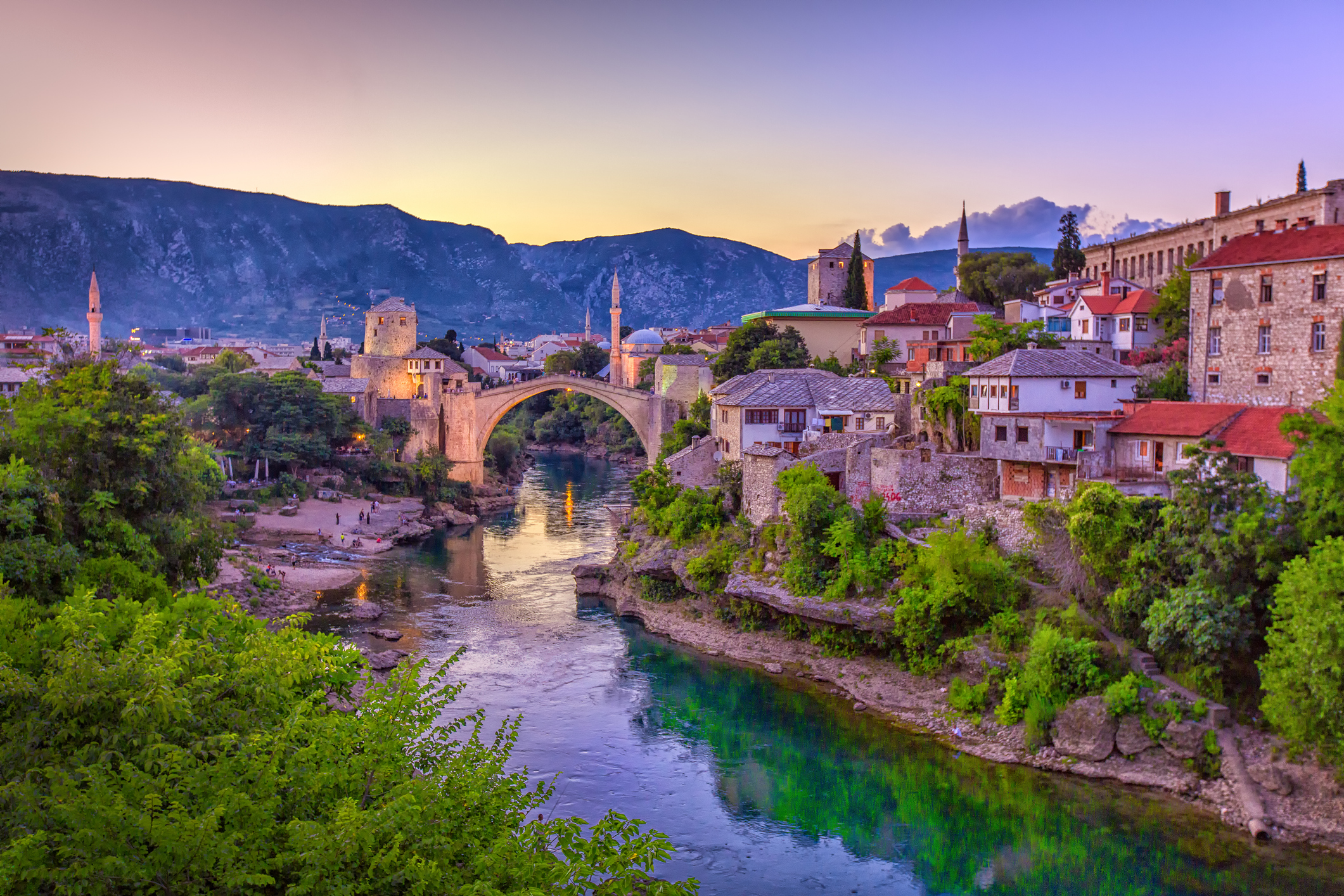
Mostar's Old Bridge area and Višegrad's Mehmed Paša Sokolović Bridge are separate UNESCO World Heritage properties. One sits within the old city on the Neretva; the other spans the Drina. Their river settings are as distinctive as the structures themselves. Include both if you want the wider journey between Herzegovina and eastern Bosnia, rather than assuming they belong to the same local outing.
Look beyond a single “Austro-Hungarian style”
Sarajevo City Hall’s Neo-Moorish design looks very different from the National Museum’s Neo-Renaissance complex. Both belong to the Austro-Hungarian period. Comparing them is more interesting than treating every ornate building as a blend of East and West: each had a particular purpose, design and place in the expanding city.
Choose buildings you want to spend time with
Would you rather follow the streets, visit a museum or go inside selected religious buildings? Opening arrangements, worship and exhibitions can shape the route. Tell us your interests and walking pace, and leave room for everyday city life between the historical stops.